

Agrarian Policies and Rural Violence
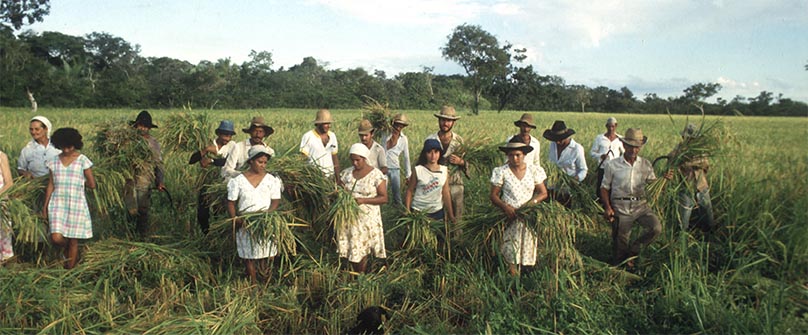
The rate of new settlements in the first half of 2005 was below what was needed. During this period, only 15.9 thousand families were settled, compared to the settlement of 21.7 thousand families in the first half of 2004 – which is an insufficient number.
Smoke Screen: measures announced by the government to prevent violence against rural workers
In the state of Pará, in the last 33 years there have been 772 murders of rural workers and of people who supported them. Only in three of these cases the people who ordered the killings were sentenced.
False Promises of Agrarian Reform
More than two years later, 75% of the National Plan for Agrarian Reform has not been implemented. Fewer than 100,000 families have actually been settled, when the Plan established a goal of distributing land to 400,000 families.
Workers linked to Sister Dorothy are still frightened by the violence of the ranchers in Anapu
If before Sister Dorothy’s death, threats were made even by the local radio, giving the names of the people who would be the next victims, today there is another way. It is hidden, inhibited by the presence of the Army and the Federal Police, who were installed there after the crime. But the insecurity of rural workers in the region is still the same. Impunity is the main reason for this situation. All the murderers who shot Dorothy may be convicted, but few believe in convictions for those who ordered the crime.
Repression against the Movement of People Affected by Dams
The government’s energy policy has been focused creating the best conditions for large corporations in the sector, guaranteeing huge profits with the production and sale of electric energy in Brazil.
Diversion vs. the Human Right to Water
Specialists say that no large center in the Northeast needs the waters of the São Francisco to supply its population. This is only the pretext. What is certain is that 70% of the water to be diverted will go for irrigation, industry, and shrimp farming. In any event, let’s say that the project will supply twelve million people in the urban environment. This would be the noble motivation. What the men behind the diversion don’t talk about is that in Northeastern Brazil there are 2.2 million families spread throughout the barren lands—the so-called diffuse population—which means approximately 12 million people. This is the population that lives with constant insecurity with regard to water, both from the quantitative and qualitative points of view, as well as in terms of regularity of access to water.
Peasant Agriculture
Diversity creates unique local and environmental identities. It ties territory, social practices, environment and culture. It cements cultural identities that transform into trenches of resistance. It breeds shared political will to fight for rights, for traditions, for survival and for perspectives of a future without the destruction of its own history and ways of life. It raises the desire for dialogue, for respect and for the construction of political unity between various cultures and peasant identities for the popular struggle around the right to an existence and to the right to build a future.
Violence Against Indigenous People in Brazil
We would like to call urgent attention to the situation of the Guarani-Kaiowá nation in the state of Mato Grosso do Sul, where intense violence have been committed against indigenous people.
The National Plan for the Eradication of Slave Labor is three years old and will be reevaluated
Between 1995 and 2005, almost 16,500 slave workers were liberated in Brazil. In 2005 alone, there were 3,285 freed workers and 119 ranches inspected, 56 mobile group operations and R$ 6,257,566.40 (US$2,844,448.36) paid in fines. Researchers on the issue and representatives of the Ministry of Labor agree that the National Plan for the eradication of Slave Labor— developed under Fernando Henrique Cardoso’s government and launched under Lula’s government—was an advance in government policy against slave work.
Police Violence in Rio de Janeiro: from Beatings to the Use of Lethal Force
Taking only three states of the country (Rio de Janeiro, São Paulo, and Minas Gerais), a comparison with patterns of police forces known for violence (such as South Africa and the United States) reveals a pattern of use of lethal force completely out of acceptable proportions. The police of these three Brazilian states have killed almost five times more civilians than all of the North American states combined.
“No one is illegal no matter where they live”
Bolivians, Paraguayans, Peruvians and Chileans compose a virtual army of cheap and abundant workforce in the capital of São Paulo. The draft of the New Foreigner Law that is passing through the National Congress is extremely selective from the economic point of view and doesn’t resolve the situation of the undocumented immigrant workers.
Migrant Workers in the Ribeirão Preto Region
Several workers testify that some factories deny them daily food rations when average productivity is less than 10 tons of sugar cane per day. Recent reports indicate that wages are declining in several locations. In the Itapolis region in Sao Paulo, the pay for a box of oranges is only R$ 0.30 (USD $0.15) while in 2001 the price was R$ 1.30 (USD $0.60). In the Riberão Preto region, factory owners distribute a glucose-based liquid to workers after lunch time in order to compensate for their lack of food to meet the demands of growing productivity. Because workers use so much energy, there are many cases of cramping and severe back pain. Dehydration due to the unrelenting rhythm of the work—a worker swings his knife 9,700 times a day to reach the average 10 tons of sugar canes—causes cramps and provokes numerous physical problems including heart attacks.
The Denial of the Right to Work
The largest gaps in the workforce have not been salaried workers, but self-employed, autonomous, independent and cooperative workers, among others. Moreover, the type of self-employed work that has really expanded is what is traditionally called “autonomous” work—which is characterized, in general, by poor working conditions and income. Currently, unemployment has become a complex and very heterogeneous phenomenon, achieving a generalized form in practically all segments of society, including spheres with high levels of education, experienced professionals and workers with the highest salaries. It is thus possible to conclude that there are no longer any strata of Brazilian society that are immune to unemployment.
Employment in Brazil in 2005: Challenges and perspectives
Many young people are forced to make a choice between study and work. Generally speaking, in all of the metropolitan regions that have been analyzed, the number of poorer young people who succeed in reconciling work and study is much lower than the number of young people from families with greater resources.
For a National Plan to Combat Displacements and Forced Removals and to Protect the Right to Adequate Housing
In Brazil, the number of homeless people increased from six million in 2004 to seven million in 2005. In addition, about 13 million people live in precarious houses, with no access to basic services. The number of cases of displacement and forceful removal of rural communities has grown. The most serious case happened in the month of February, 2005, at the Western Industrial Park, Sonho Real Settlement, in the city of Goiania, which caused the death of two people and left 24 people wounded. The removal and the destruction of housing of approximately 4 thousand families led to the formation of a favela around the sports gymnasium destined to give provisional shelter to the population that had been removed.
Life on the Streets
The social inclusion of people in a street situation depends in large part on individual transformation, but also on a change in attitude by society, media, and governments.
Brazilian women in the beginning of the 21st Century[1]
In Brazil, a woman is beaten every 15 seconds, but this statistic does not show the true extent of the problem. Every 15 seconds a Brazilian woman is prevented from leaving her home, every 15 seconds another is forced to have sexual relations against her will, and every 9 seconds another is criticized for her sexual conduct or her performance at work, either in or outside the home.
The Persistence of Racial Discrimination in Brazil
In 2004 dentist Flavio Sant’Anna was shot to death without even a chance to defend himself, in a cruel demonstration of the São Paulo Police modus operandi. It was later revealed by the investigative process that being black was the sole reason for his killing.
Fome Zero***, National Policy for Nutrition and Food Security, and the promotion of the Human Right to Adequate Food
Poverty, hunger, and the violation of the Human Right to Adequate Food remain a challenge to be faced by Brazilian society, especially regarding indigenous peoples, Quilombolas*, Afro descendents, populations in encampments, settled populations**, the homeless, street dwellers, and those who make a living out of garbage dumps. There are still millions of families who, in spite of getting a regular income supplement, are not inserted in the productive process in a sustainable manner, in order to ensure a dignified way of feeding themselves and their families.
The Economic Restrictions for Public Education
The proposal by FUNDEB – despite the extension of federal financing of public education beyond the elementary level – has been criticized by educational and social organizations for excluding early childhood education and daycare centers for the attendance of children of zero-three years old. If the proposal was ratified in its present form it would have a negative impact on the access to education of the youngest children of low-income mothers.
At Fifteen: The Statute of Children and Adolescents in the Neo-liberal Era
In spite of the potential new policies for advocating children’s rights, established by the ECA (Statute of Children and Adolescents), concrete implementation has been compromised by the lack of interest on the part of the government. The division of responsibility between the Government, the states and counties is still confused and subject to conflict – the various spheres fleeing from responsibility. On the other hand, the population is not well informed or organized to propose, subsidize, demand and evaluate social policies.
The Access of State-held Information as a Human Right
The free access of State-held information is a fundamental requirement in achieving open public debate, enabling people to assume an active role in the governing of their country.
Identifying Flávio Molina
For the past 15 years, Flávio Molina’s family had to endure unnecessary and unjustifiable anguish of knowing that there was a possibility of his remains being among the bones exhumed from a secret grave in the Dom Bosco de Perus Cemetery. It took only 20 days for a private lab in São Paulo to reach conclusive results over the identification of the remains, something that the public agencies could not accomplish in years.
Public Debt and the Loss of Human Rights
In Brazil, the taxation model is unjust, regressive, and it concentrates income by taxing workers and consumers in an accentuated way, sacrificing the lowest income level and at the same time going easy on big capital, profits, the latifúndios, and inheritances.
The WTO and the Destructive Effects of the Sugarcane Industry in Brazil
The sugarcane industry is Brazil’s fastest-growing agribusiness of 2005. Its expansion has brought with it serious consequences for the country, such as environmental destruction, removal of agricultural workers from their land and frequent workers’ rights violations. Sugarcane plant supervisors demand that each worker cut, on average, twelve to fifteen tons of sugarcane per day. Between January 2004 and September 2005, the Migrants’ Pastoral registered eight workers’ deaths due to an excess of work in the cane fields of the Ribeirão Preto region alone.
The Military Strategy of the United States
One of the main goals of the U.S. policy of military intervention is the control of strategic goods, which includes natural resources, energy and biodiversity, along with the implementation of an economic model that promotes the privatization of “basic services”. These “services” are, in fact, basic rights such as health, education, social security, etc. According to writer Eduardo Galeano, the United States always finds “noble causes” to justify the war. They never admit “killing with the intention of pillage”.
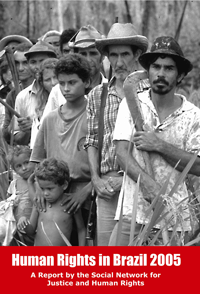
A Report by the Social Network for Justice and Human Rights
Table of contents
Preface
Ricardo Rezende Figueirauma
I. Human Rights in the Countryside
Agrarian Policies and Rural Violence
José Juliano de Carvalho Filho
Smoke Screen: measures announced by the government to prevent violence against rural workers
Antônio Canuto
False Promises of Agrarian Reform
João Pedro Stedile
Workers linked to Sister Dorothy are still frightened by the violence of the ranchers in Anapu
Evanize Sydow
Repression against the Movement of People Affected by Dams
Eduardo Luis Zen
Diversion vs. the Human Right to Water
Roberto Malvezzi
Peasant Agriculture
Frei Sérgio Antônio Görgen
Violence Against Indigenous People in Brazil
Paulo Maldos
The National Plan for the Eradication of Slave Labor is three years old and will be reevaluated
Evanize Sydow
II. Human Rights in Urban Areas
Police Violence in Rio de Janeiro: from Beatings to the Use of Lethal Force
Silvia Ramos
“No one is illegal no matter where they live”
Luis Bassegio e Roberval Freire
Migrant Workers in the Ribeirão Preto Region
Maria Aparecida de Moraes Silva
The Denial of the Right to Work
Marcio Pochmann
Employment in Brazil in 2005: Challenges and perspectives
Paulo César Pedrini
For a National Plan to Combat Displacements and Forced Removals and to Protect the Right to Adequate Housing
Nelson Saule Júnior, Leticia Osorio, Patricia de Menezes Cardoso
Life on the Streets
Marcio Seidenberg
III. Economic, Social, and Cultural Rights
Brazilian women in the beginning of the 21st Century
Gustavo Venturi e Marisol Recamán
The Persistence of Racial Discrimination in Brazil
Raquel Souzas
Fome Zero, National Policy for Nutrition and Food Security, and the promotion of the Human Right to Adequate Food
Flávio Luiz Schieck Valente
The Economic Restrictions for Public Education
Sergio Haddad e Mariângela Graciano
The Lula Administration’s Environmental Policy for the Amazon
Jean-Pierre Leroy
At Fifteen: The Statute of Children and Adolescents in the Neo-liberal Era
Maria Helena Zamora
The Access of State-held Information as a Human Right
Ana Luisa Gomes Lima e Camila Colares Bezerra
Identifying Flávio Molina
Suzana Keniger Lisboa
IV. International Policy and Human Rights
Public Debt and the Loss of Human Rights
Maria Lúcia Fattorelli Carneiro
The WTO and the Destructive Effects of the Sugarcane Industry in Brazil
Maria Luisa Mendonça
The Military Strategy of the United States
Maria Luisa Mendonça