

Table of contents
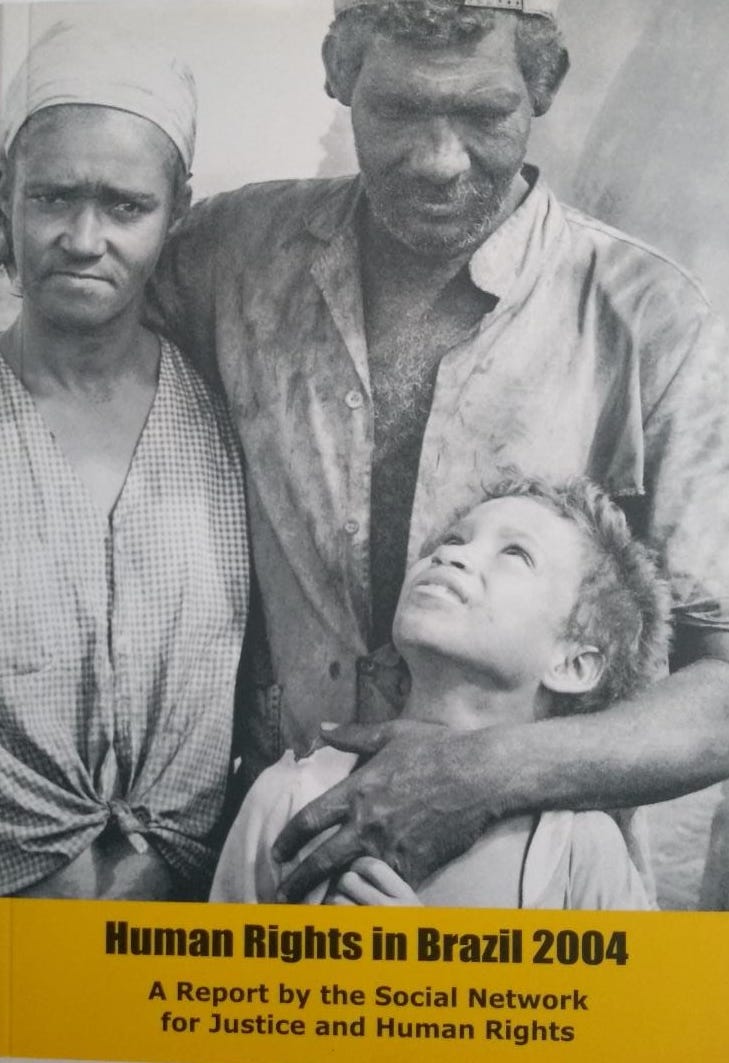
Human Rights in Brazil 2004A Report by the Social Network for Justice and Human Rights Edited by: Evanize Sydow e Maria Luisa MendonçaPhotos: João Roberto RipperGraphic Design: Carlos Vasconcelos PitomboAdministrative Assistance: Graça Silva e Marta Soares Translators: Ana Amorim, Benny…
Preface
Today, the expression “human rights” is much more accepted than it was 30 years ago. We have gone from defending the rights of political prisoners during the dictatorship to the much more inclusive and veritable concept of “all rights for…
Introduction
In its 37 articles, the Report on Human Rights in Brazil 2004 brings forward important data and analysis about human rights in the country through recent years and especially in relation to the situation in 2004. The nearly 25 years…
Violence in the Countryside and Land Reform
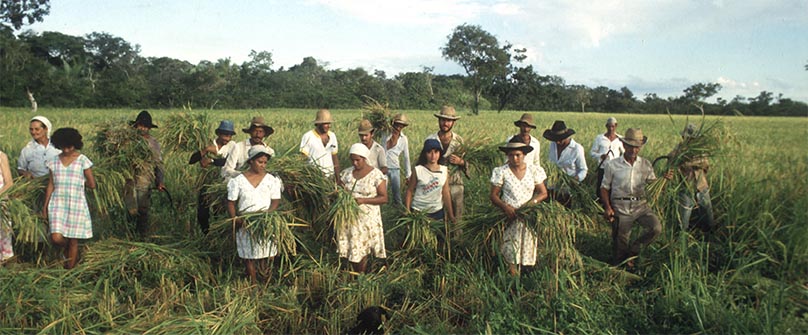
In September 2004, an MST survey showed that only 5440 families from MST encampments had been settled on land since the beginning of the Lula government. Data from the Agrarian Reform Auditor indicates that from January to August of this year the number of land occupations increased 47% in relation to the same period last year, reaching a total of 271.
Violence and Aggression against Human Rights in the Wake of Agribusiness
The agribusiness sector concentrates land, water, and income. Its production is mainly for export, creating profits for a privileged elite at a very high socio-environmental cost. The irrigation of monoculture consumes 70% of the country’s water. Its machines are substituted for manual labor in the countryside, in a country whose greatest problem is unemployment. In the states where agribusiness has expanded, privately-sponsored violence is growing, along with repression through the power of the Judiciary.
Transgenic crops – An Important Debate
What is in discussion here are two models of rural development. One of them is centered on large landholdings controlled by multinational groups and focused on chemical input-dependent monoculture production. The other is centered on small and medium sized agricultural production units organized in cooperative networks, local agro-industries, national companies, strategic public companies, and based in the diversification of production and in organic and agro-ecologic technologies.
GMOs AND FOOD SOVEREIGNTY
The refusal to perform research on GMO products creates great doubts about their safety. Besides, what would be the problem in labelling such products? Those who defend the release of GMO products do not have the courage to state that they are in fact defending the monopoly of ten transnational corporations that control all GMO seeds in the world. What is at stake is whether our country will be able to guarantee food security for its people.
Trends in the Current Policy that Prevent Agrarian Reform
The government rejected the proposal to expropriate 36 million hectares in order to distribute land to one million families, at a cost of R$ 24 billion, claiming that there would not be sufficient funds and it lowered the goal to 400 thousand families. However the government increased the goal of the primary surplus with the IMF to more than R$56.9 billion.
Slavery for debt [1]
From 1995 to 2004, the Ministry of Labor’s Special Group freed nearly 12,000 people from the debt that indentured them to slavery. Among the people charged were those who held political office: Jorge Picciali and his son Leonardo Picciani, members of the state and federal House of Representatives respectively, representing Rio de Janeiro, and charged for slaving at their Mato Grosso farm; Inocêncio de Oliveira, a Pernambuco member of the House of Representatives, was charged at his farm in Maranhão; and, for the practices on their farm in the state of Pará, João Braz Da Silva, mayor of Unaí, Minas Gerais, and Francisco Donato de Araújo Filho, Secretary to the Governor of the State of Piau were brought to justice.
The national policy for the eradication of slave labor
A serious problem related to the issue of slave labor is the concession of credits to landowners who benefit from this labor, especially in the Amazon region. The implementation methods of modern day slavery are extremely cruel. The slave is no longer considered “merchandise,” having no value with which its “owner” can negotiate in the “market.” The slave is considered an object for immediate consumption and eventual disposal.
Indigenous peoples in Brazil
The following is a general account of the status of indigenous lands in Brazil: Indigenous lands registered as part of national heritage: 37.21%; ratified demarcation of boundaries: 6.66%; lands declared by order of the Minister of Justice: 6.06%; lands identified as Indigenous by the FUNAI: 4.6%; “undesignated” lands: 20.6%; and lands “without provision”: 21.81%. With respect to violence against Indigenous peoples, the National Secretariat of the Indigenous Missionary Council has registered the murder of 16 Indigenous people from January to October, 2004.
ENERGY FOR THE PURPOSE OF CAPITALIST EXPLOITATION
The World Commission on Dams- WCD/2000 estimated that one million people were displaced from their land due to dam construction in Brazil. This is the equivalent of 300,000 families. Eighty million people have already been affected around the world. Data from MAB (Affected by Dams Movement) show that, for each 100 dislocated families, 70 do not receive any kind of compensation.
Water and Human Rights
While 20% of the Brazilian population (about 37 million people) lacks access to potable water, in rural areas the portion rises to 90% without proper sanitation, including access to clean drinking water. The crisis reaches into the periphery of the cities. Basically, it is the poor who go thirsty.
Social Exclusion in Brazil and the World
With almost 25 years of stagnation in income per capita, solidifying the worst distribution of income and wealth, the irresponsible link to short term international capital, and the permanence of neoliberal style political economy during the 1990s could not result in a scenario other than the predominance of poverty and the advance of social disintegration.
COMBATING IMPUNITY IN THE STATE OF ESPÍRITO SANTO
In 2003, a year after the Special Mission of Combating Organized Crime had already been in a effect, the number of homicides rose to 1,782, or, in other words, 54.8 homicides for every 100,000 inhabitants, and the number of violent deaths was 2,228, which means 106.7 for every 100,000 inhabitants. Vitória is the Brazilian state capital with largest number of deaths in between the ages of 15 and 24: 197.1 murders for every 100,000 inhabitants. It is worthwhile to recall that UNESCO considers a situation as civil war when the index is above 50 deaths for every group of 100,000 inhabitants.
Institutional Abuse: Cases of Human Rights violations in the area of maternal and neonatal health care in the state of Rio de Janeiro.
Institutional Abuse is violence practiced in institutions that render public services such as hospitals, clinics, schools, police stations, and the courts. It is done by people who are supposed to protect women victimized by violence and treat them kindly, preventing and repairing damage that they may have suffered.
A New Maranhão, Without Violence, Is Possible
During eight months of research, 123 murders were committed in the state of Maranhão, the greatest number occurring in the month of May and the lowest incidence in August, with an average of 15.37 homicides per month. Most victims were males (88.94%) between 20 and 30 years of age (46.9%).
Migrants: Needed and discriminated against
Coming to work in the sewing shops of São Paulo has become a common idea in Bolivia. Radio ads offer work with wages up to ten times the Bolivian minimum wage, plus housing and boarding. Everything seems easy. Because no experience is required there are many candidates. Even those who can’t afford the trip have an option: the “cats”[1]will pay for the trip and charge for it later. But the trip expenses are inflated and the wages reduced. Thus, indentured servitude is created.
CHILDREN IN THE TRAFFICKING OF DRUGS[1]
The 2nd Sub-Station for Infants and Youth – 2nd VIJ – provides an example of the work of the Judicial System of Rio de Janeiro, which handles the treatment of crimes committed by children and adolescents up to age 18. Between 1996 and 2000, 25,488 children and adolescents were seen at the 2nd VIJ, of these 11 percent were female, and 89 percent were male.
25 YEARS OF AMNESTY: “WHOEVER IS SILENT OVER YOUR BODY CONSENTS TO YOUR DEATH”
Torture is a self-evident crime. The torturers, those who ordered and were responsible for torture and killings during the dictatorship, had not been convicted, nor even tried or accused in a criminal proceeding, and a great number of them have remained anonymous until now. Why then, would they have been granted amnesty?
The babaçu coconut workers and the struggle to end rural subjugation
Demolitions and burning the houses of women coconut workers are common forms of pressure by landowners to guarantee the exclusivity of their coconut deals. There are cases of physical violence against women, in which managers, landowners, or supervisors submit the women to beatings and sexual violence. Women have also been forced to clear fields of grass in order to gain access to the coconut collection area.
Women’s rights over their bodies
The mass media –particularly through advertising– constructs an image of the perfect woman with the perfect body. The perfect woman is young, blond, slim, and tall with voluptuous breasts and long hair. At the same time in our consumer culture, eating and shopping are compulsive acts that relieve the pain of existence, as if the value of women in society was directly related to their weight and proximity to the standard of beauty.
Examples of Violation of the Right to Health
Maternal deaths are responsible for 6% of the deaths of women between the ages of 10 and 49, and are among the 10 primary causes of death in the Brazilian population. It is estimated that 3,000 deaths occur every year of women in the pregnancy-childbirth cycle.
WTO Agreement threatens treatment of AIDS in Brazil
The agreement on intellectual property, known by its acronym TRIPS, which was signed along with 12 other agreements during the creation of the World Trade Organization (WTO), is unjust because it gives a monopoly to the bearer of knowledge about essential products such as food and medicine. Such is the case of the treatment for AIDS. Brazil started applying TRIPS from the first year of the signing, which prevented our country from producing generic drugs and made it dependent on generics from India. Beginning in 2005 India cannot produce these medicines any longer. As a result, the costs for our country to treat AIDS will go from R$ 700 per year to R$ 3.5 billion per year, which can be the end of Brazil as a model for the treatment for the illness.
Education in Brazil in the Lula government: A brief assessment
If it is true that all initiatives that promote affirmative action policies at any teaching level should be valued, it is also true that any mechanism that implies the support of private initiative by the public sector in education can occur only for limited periods of time as an emergency measure, based upon a clear plan to offer quality public education to everyone.
BRAZIL, WHY SO MUCH UNEMPLOYMENT?
Comparing the gains in wage readjustments with the losses owing to “rotation” in the first half of 2004, we had around 5.1 million workers hired and 4 million workers laid off. Rotation brought an average salary loss of 40% for those who were rehired.
The Right to Communication: Still a Far Off Horizon
Contrary to other countries, there is not, in Brazil, any way to prevent cross-ownership of communication media, i.e., the possession and licensing of means of communication of different types in a single geographical area. Scarcely six private national open television networks and their 138 affiliated regional groups control 667 media outlets. Their vast field of influence is fed by 2194 VHF television stations that encompass more than 90% of the national stations. Add to these another 15 UHF stations, 122 AM radio stations, 184 FM stations, and 50 daily newspapers.
GLTB and Human Rights in 2004: A Summary
Homophobia has been responsible for the killing of 2,403 gays, lesbians, and transvestites in Brazil in the last 20 years. At the end of 2003, the government launched the Brazil Without Homophobia Program. This was a historic moment for the advance of homosexuals’ human rights.
The Campaign Against the FTAA in Brazil
Our colleague Samuel Pinheiro Guimarães, the current General Secretary of the Brazilian Ministry of Foreign Relations, said: “It’s possible to guess, with relative certainty, how the FTAA will turn out. The FTAA will be mostly like NAFTA, and any difference introduced will only be to make it more advantageous to the U.S.”
BRAZIL AND THE INTER-AMERICAN SYSTEM FOR HUMAN RIGHTS PROTECTION
In spite of some legal instruments adopted by the Brazilian government against torture and abuse, the process of abiding by UN recommendations is far from expected. Abuses by policemen are still frequent. The investigation of crimes committed by policemen is still done by inefficient and partial courts. The prison system is in a precarious state, with overcrowded jails, exceeding of detention times, and absence of information to the families about the situation of the inmates.
The Counter-Agrarian Reform of the World Bank
From January 2003 to July 2004, Brazil received $3.2 billion in loans from the World Bank and from the Inter-American Development Bank. During this same period, Brazilian public institutions paid $6.9 billion to these banks. In other words, Brazil sent abroad $3.7 billion more than it received.
A Report by the Social Network for Justice and Human Rights
A Report by the Social Network for Justice and Human Rights
Preface
Frei João Xerri and Lilia Azevedo
I. Human Rights in the Countryside
– Violence in the Countryside and Land Reform
Maria Luisa Mendonça and Roberto Rainha
– Violence and Aggression against Human Rights in the Wake of Agribusiness
Antônio Canuto
– Transgenic crops – An important Debate
Sérgio Antônio Görgen
– GMOs and Food Sovereignty
João Pedro Stedile
– Trends in the Current Policy that Prevent Agrarian Reform
Plínio de Arruda Sampaio and Marcelo Resende
– Confiscation of land as a way to combat slave labor
Xavier PLassat
– Slavery for debt
Ricardo Rezende Figueira
– The national policy for the eradication of slave labor
Marcelo Gonçalves Campos
– Indigenous peoples in Brazil
Rosane Lacerda
– Energy for the Purpose of Capitalist Exploitation
Marco Antonio Trierveiler, Gilberto Cervinski, Luiz Dalla Costa and Eduardo Zem
– Water and Human Rights
Roberto Malvezzi
II. Human Rights Violations in Urban Areas
– Social Exclusion in Brazil and the World
Marcio Pochmann
– Combating impunity in the State of Espirito Santo
Tânia Maria Silveira
– Institutional Abuse: Cases of Human Rights violations in the area of maternal and neonatal health care in the state of Rio de Janeiro
Laura Mury
– A New Maranhão, Without Violence, Is Possible
Josiane Gamba
– Migrants: Needes and discriminated against
Luiz Bassegio
– Children in the trafficking of drugs
Jailson de Souza e Silva
– 25 Years of Amnesty – “Whoever is silent over your body consents to your death”
Suzana Keniger Lisbôa
III. Economic, Social, and Cultural Rights
– The babaçu coconut workers and the struggle to end rural subjugation
Helciane de Fátima Abreu Araújo, Cynthia Martins Carvalho and Carolina Mendes Magalhães
– Women’s rights over their bodies
Miriam Nobre
– Examples of Violation of the Right to Health
Eleonora Menicucci de Oliveira and Lúcia Maria Xavier
– WTO Agreement threatens treatment of AIDS in Brazil
Evanize Sydow
– Education in Brazil in the Lula government: A brief assessment
Sergio Haddad and Mariângela Graciano
– Brazil, why so much unemployment?
Paulo César Pedrini
– The Right to Communication: Still a Far Off Horizon
Diogo Moysés and João Brant
– GLTB and Human Rights in 2004: A Summary
Toni Reis
IV. International Policy and Human Rights
– The Campaign Against the FTAA in Brazil
Ricardo Gebrim
– Brazil and the Inter-American system for Human Rights Protection
Liliana Tojo and Ana Luisa Lima
– The Counter-Agrarian Reform of the World Bank
Marcelo Resende and Maria Luisa Mendonça